
Stop building on broken code. Make it bulletproof.
Google doesn't read pretty websites; it reads server logs, crawl maps, and structured data. We eliminate the invisible backend errors, indexation blockers, and speed bottlenecks holding your WordPress site back from Page 1.
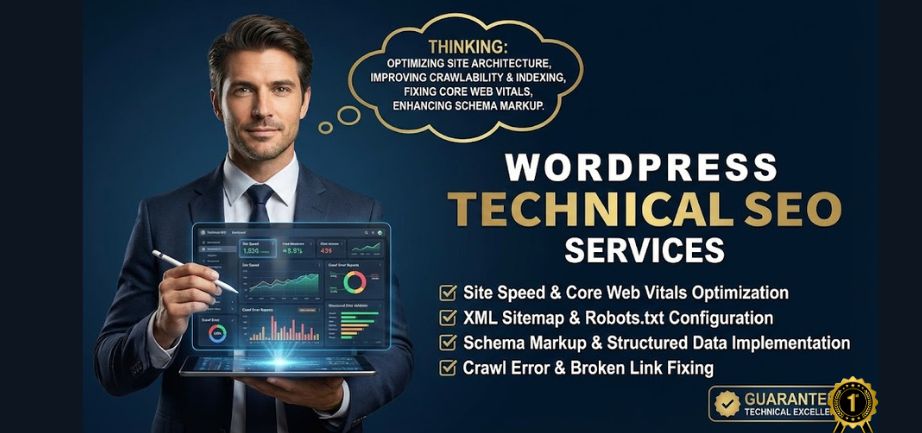
LCP: 0.8s
Vitals Passed
Googlebot
Crawl Active
You cannot out-write a broken foundation.
You can publish the best content in your industry, build incredible backlinks, and have a beautiful design. But if Googlebot hits an endless redirect loop, a JavaScript rendering error, or a bloated DOM structure, your pages are essentially invisible.
Crawl Budget Waste
Google only allocates a certain amount of time to crawl your site. If your WordPress theme is forcing the bot to crawl thousands of useless tag pages, author archives, or faceted search filters, your actual money pages get completely ignored.
Architecture Bleed
Authority flows through links. When your site is full of orphan pages (pages with zero internal links) and broken URL silos, the "link juice" you worked so hard to build bleeds out before it ever reaches your high-converting service pages.
Code & Asset Bloat
Heavy page builders and unoptimized plugins inject thousands of lines of unused CSS and render-blocking JavaScript. This destroys your Core Web Vitals, triggering Google’s algorithmic demotion for poor user experience.
LLMs don't read web design. They parse structured data.
In 2026, Google’s AI Overviews and Generative Engines operate differently than traditional crawlers. They don't look at your layout; they extract raw data points. If your technical architecture doesn't explicitly feed the algorithm the precise entities it's looking for, you won't be cited as a source.
Strict Semantic HTML
AI engines rely on perfect H1-H6 heading logic and a clean Document Object Model (DOM) to understand the context of your page. A messy tag structure confuses the machine and kills your ranking.
Advanced JSON-LD Schema
You cannot wait for AI to figure out who you are. We inject nested JSON-LD schema code directly into your header, explicitly stating your organizational entity, authors, services, and FAQs in native machine language.
Entity Resolution Architecture
LLMs connect concepts, not just keywords. We map your internal linking structure to build a definitive Knowledge Graph, proving your topical authority across your entire WordPress database.
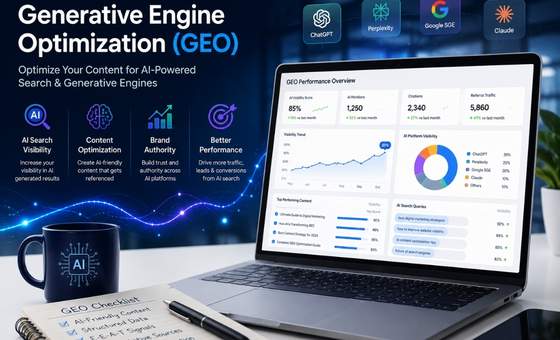
JSON-LD NODE
Schema Parsed
ENTITY RECOGNIZED
Confidence: 98%
How our engineering team stops the bleeding.
We don't do "quick fixes" or install bloated cache plugins and call it a day. We perform deep, code-level surgery on your WordPress architecture. Here is the four-phase protocol our team uses to bulletproof your site.
Server Log Diagnostics
We bypass standard crawling tools and pull your raw server logs. We analyze exactly how Googlebot is interacting with your site to uncover hidden redirect chains, crawl traps, and dead-end resources wasting your crawl budget.
DOM & Vitals Refactoring
We strip out heavy, render-blocking JavaScript and unnecessary CSS injected by your theme and plugins. We streamline your Document Object Model (DOM) to ensure your site passes Google's Core Web Vitals thresholds with green scores.
Knowledge Graph Injection
We construct advanced, nested JSON-LD schema across your entire architecture. This guarantees that AI Overviews and traditional search bots instantly understand your entity, authorship, and content hierarchy without guessing.
Indexation Forcing via API
We don't wait weeks for Google to notice the changes. We utilize the Google Indexing API to push your newly optimized, clean architecture directly to the search engine, forcing a rapid recrawl and immediate ranking adjustments.
A beautiful website with bad code is a digital paperweight.
"We paid a design agency $15,000 for a gorgeous custom WordPress redesign. The day we launched, our organic traffic dropped by 60%. The agency told us it was just 'the Google dance.' Three months later, we were bleeding money."
This happens every day. Designers build for human eyes; SEOs build for AI crawlers.
It turned out, the development team had accidentally left the site's staging environment indexed, bloated the database with 40 active plugins, and destroyed the URL permalink structure without setting up proper 301 redirects.
DeepWPSEO bridges the gap between aesthetics and algorithm. We perform forensic SEO sweeps on WordPress architectures to ensure that your website’s backend is as flawless as its frontend.
Plugin & Bloat Purge
We audit your active plugin stack and strip out conflicting, outdated, or redundant scripts that are choking your server response time and causing silent PHP errors.
Database Optimization
WordPress databases naturally bloat with thousands of post revisions, orphaned meta data, and transient options. We run deep SQL optimizations to make your database hyper-responsive.
Redirection & 404 Mapping
Broken links tell Google your site is neglected. We crawl your entire domain to identify 404 errors and implement strict 301 redirection maps, reclaiming lost authority and restoring link equity.
How we rebuild your engine, while the car is running.
We don't guess. We pull your server logs, identify the exact lines of code choking your performance, and systematically execute a technical rebuild without taking your site offline.
Forensic Crawl Analysis
We simulate Googlebot's exact path through your architecture. We identify infinite redirect loops, canonical tag conflicts, and massive crawl traps that are actively burning your crawl budget.
Core Web Vitals Refactoring
We don't just install a basic cache plugin. We defer render-blocking JavaScript, optimize critical CSS delivery, and clean your DOM tree so your heaviest pages load in under 1.5 seconds.
Schema & Entity Injection
We hardcode advanced, nested JSON-LD schema into your headers. This instantly translates your page content into the exact machine-readable data format that AI search engines and Generative Overviews demand.
API Indexation Forcing
Once the foundation is pristine, we don't wait weeks for Google to notice. We use the Google Indexing API to push the newly rebuilt URLs directly into the search index for rapid recalibration and ranking recovery.
Answering the Hard Questions.
Designers focus on human visuals, not crawler accessibility. Redesigns often destroy URL permalink structures, create redirect loops, and bloat the DOM with heavy JavaScript, blocking Googlebot from parsing your content. We fix the code architecture so the algorithm can read your site again.
Absolutely. AI models rely on headless browsers to crawl sites in real-time. If your server response time is slow or heavy JavaScript blocks the rendering path, the AI simply times out and cites a faster competitor instead. Speed is now a critical AI accessibility metric.
Plugins are band-aids, not cures. A caching plugin cannot fix a bloated WordPress database, poorly coded theme files, or third-party script conflicts. We perform code-level surgery to eliminate the root cause of the slowdown, rather than just masking it with cache.
Google only allocates a finite amount of server resources to crawl your domain. If your WordPress site generates thousands of useless auto-generated tag pages, author archives, or parameter URLs, Google wastes its budget on junk and ignores your high-value money pages. We seal those leaks.
LLMs do not read paragraphs like humans; they parse structured data. We deploy advanced, nested JSON-LD schema that explicitly defines your business entity, services, authors, and data relationships. This spoon-feeds the AI the exact context it needs to cite you as the primary authority.
Yes. 404s cause "link equity bleed." If external sites link to a broken page, you lose all of that ranking power. We map every broken URL and implement strict 301 server-level redirects to funnel that lost authority back into your active, high-converting pages.
Stop guessing. Let's look under the hood.
We will run a forensic crawl of your entire WordPress architecture, identify the exact errors blocking your indexation, and hand you the blueprint to fix them.
Claim Your Technical Audit