


“If your website speaks only one language, your brand is whispering in a world that’s shouting in a hundred tongues.”
— Faysal Ahammed, International SEO Expert
The World Doesn’t Speak in One Language
The internet might look universal, but people still search, read, and buy in their own language.
If your WordPress site only speaks English, you’re invisible to millions of potential customers who prefer French, Arabic, German, Spanish, or Japanese.
That’s why Multilingual WordPress SEO isn’t a luxury anymore — it’s a survival.
It helps your brand speak to hearts and rank on search engines in every corner of the globe.
When a user in Germany searches “Reisepass online kaufen”, or someone in France types “acheter un passeport en ligne”, you want your site to appear right there.
This is what multilingual SEO delivers — a bridge between your brand and the world.
1. What is Multilingual SEO?
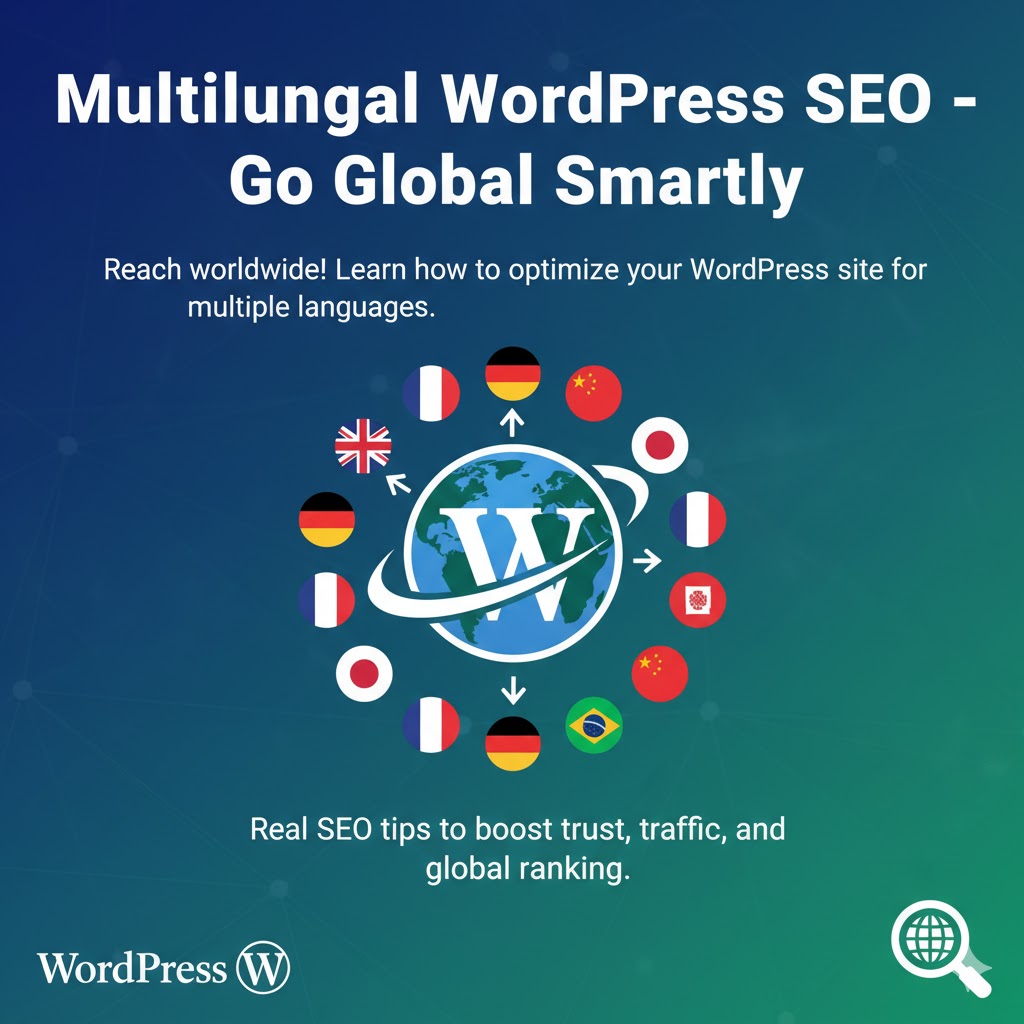
Multilingual SEO is the process of optimizing your website for multiple languages and regions, so search engines show the right version to the right audience.
It’s not just about translating text — it’s about building a localized experience.
Here’s what it means in real-world terms:
| Element | English Version | French Version | Arabic Version |
|---|---|---|---|
| URL | deepwpseo.com/en/passport | deepwpseo.com/fr/passeport | deepwpseo.com/ar/جواز-السفر |
| Title | Buy Passport Online | Acheter un Passeport en Ligne | شراء جواز سفر عبر الإنترنت |
| Meta Description | Fast, secure, and verified service. | Rapide, sécurisé et vérifié. | خدمة سريعة وآمنة ومضمونة. |
So yes, translation is only step one.
True multilingual SEO involves cultural alignment, user behavior, and search intent for each region.
2. Why Multilingual SEO is the Key to Global Success
Let’s get straight: SEO isn’t only about ranking high — it’s about being found by the right people.
And the “right people” might not be English speakers.
Here’s the data that says it all:
| Language | % of Internet Users | Share of Online Buyers | SEO Potential |
|---|---|---|---|
| English | 25% | 52% | High but crowded |
| Chinese | 20% | 19% | High and growing |
| Spanish | 8% | 9% | Great for global audience |
| Arabic | 5% | 7% | Rising fast in 2025 |
| French | 4% | 6% | Strong in Africa & Europe |
“Going multilingual is not just expansion — it’s evolution.”
By targeting multiple languages, your WordPress site can:
✅ Increase traffic from international markets
✅ Build local trust
✅ Improve dwell time & engagement
✅ Reduce bounce rate
✅ Strengthen your domain authority globally
3. Setting Up Your Multilingual WordPress Site (The Smart Way)
Step 1: Choose the Right Plugin
The three best plugins for multilingual WordPress sites are:
| Plugin | Strength | Best For |
|---|---|---|
| WPML | SEO-Ready, robust | Large websites & agencies |
| Polylang | Lightweight, free | Small to mid-size sites |
| TranslatePress | Live visual editing | Beginners and bloggers |
Choose one that fits your workflow — but remember: SEO compatibility is the #1 priority.
Step 2: Structure Your URLs the Right Way
| Type | Example | SEO Power | Notes |
|---|---|---|---|
| Subdirectory | example.com/es/ |
⭐⭐⭐⭐ | Shares authority |
| Subdomain | es.example.com |
⭐⭐⭐ | Easier to separate |
| ccTLD | example.es |
⭐⭐⭐⭐⭐ | Strongest geo signal, higher cost |
💡 Use subdirectories for shared SEO strength unless you’re targeting specific countries (like .fr or .de).
Step 3: Translate EVERYTHING (Not Just Content)
Many sites make this mistake — they translate the text but forget about metadata.
For true multilingual SEO, translate these too:
- Page titles
- Meta descriptions
- Image alt texts
- Slugs (URLs)
- Menu and footer items
- Schema data (if possible)
“If Google can’t read your language tags, your users never will.”
4. Mastering Hreflang Tags
Hreflang is the hidden gem of multilingual SEO. It tells Google which version of your page belongs to which language or region.
Example setup:
✅ Use on every translated page
✅ Point each page to its counterpart
✅ Verify via Google Search Console → International Targeting
This ensures visitors always land on the right version of your page — no confusion, no penalty.
5. Keyword Research by Language and Country
Here’s where the black magic of multilingual SEO shines.
Every country has its own keyword pattern.
For example, the keyword “Buy passport online” can appear like this:
| Country | Language | Local Keyword | Monthly Searches |
|---|---|---|---|
| USA | English | buy passport online | 12,000 |
| France | French | acheter un passeport en ligne | 8,100 |
| Germany | German | reisepass online kaufen | 6,700 |
| Saudi Arabia | Arabic | شراء جواز سفر عبر الإنترنت | 5,300 |
💡 Pro Tip:
Use tools like Ahrefs, Semrush, or Google Keyword Planner, and filter by country.
This helps you find exact search volume + CPC + local phrasing.
6. Why Human Translation Beats AI Translation
Yes, AI tools like Google Translate or DeepL can help — but they can’t replace human feeling.
Imagine translating “Black Magic SEO” literally — it might sound like witchcraft in some languages! 😅
Only a native human translator can make your words sound natural, emotional, and trustable.
“SEO translation is not about words — it’s about emotions that convert.”
Hire native experts for each language. Or, if budget is tight, use AI translation + human editing for accuracy.
7. Monitor Your Global Performance
Once your multilingual site is live, don’t stop there.
You need to analyze, measure, and adjust regularly.
| Tool | Use |
|---|---|
| Google Search Console | Track performance by language & country |
| GA4 (Google Analytics) | Check traffic by language dimension |
| Ahrefs / Semrush | Monitor backlinks and rankings |
| Hotjar / Clarity | Track user behavior per region |
🧭 Key metrics to monitor:
- Organic clicks per language
- CTR (Click Through Rate)
- Conversion rate by region
- Top pages by language
- Bounce rate per market
- 8. Common Multilingual SEO Mistakes
Many website owners fall into these traps:
❌ Using auto-translation plugins only
❌ Forgetting hreflang setup
❌ Leaving metadata untranslated
❌ Ignoring local hosting or slow CDN
❌ Broken internal links across languages
❌ No consistent tone or brand message
✅ Fix them, and you’ll build a clean, fast, global-ranking WordPress site.
Real-World Example
When DeepWPSEO started optimizing multilingual sites, one client from Italy saw traffic grow by 240% after launching French, Spanish, and Arabic versions.
Before:
- English-only site
- 90% traffic from one country
- Avg session time: 0:45s
After multilingual SEO:
- 4 language versions
- Traffic from 12 countries
- Avg session time: 2:30s
- Leads up by 300%
That’s the power of real human SEO magic.
10.FAQs – People Also Ask
Q1. Should I use machine translation for SEO?
No, Google recognizes machine-translated content and may consider it low-quality. Always review translations manually.
Q2. Do I need separate Google Search Console accounts?
Yes — one per subdirectory or subdomain. It helps you track language-specific performance.
Q3. What’s the ideal WordPress plugin for large websites?
WPML — it offers deep integration with Yoast, Rank Math, and multilingual sitemaps.
Q4. How long does multilingual SEO take to show results?
3–6 months for initial growth, 9–12 months for strong global positioning.
Q5. Can I use one sitemap for all languages?
Yes, but ensure it includes language-specific URLs for indexing.
11. Pro Tips for Global SEO Growth
- Use CDN with geo-routing for faster delivery
- Customize schema markup per language
- Build backlinks from local domains (.fr, .de, .ae)
- Keep tone consistent, even in translation
- Regularly audit your site with tools like Screaming Frog
“Search engines follow structure. People follow emotion. Combine both.”
12. Conclusion: Speak to the World, Not Just One Country
Your audience is already global — it’s time your website was too.
Multilingual SEO is not just about visibility — it’s about connection, emotion, and expansion.
When your content speaks in your visitor’s native tongue, you don’t just get clicks — you earn trust.
And trust, my brother, is the true currency of the digital world.
So go ahead —
Translate, optimize, localize, and globalize.
Your next loyal customer could be one language away. 🌎


