
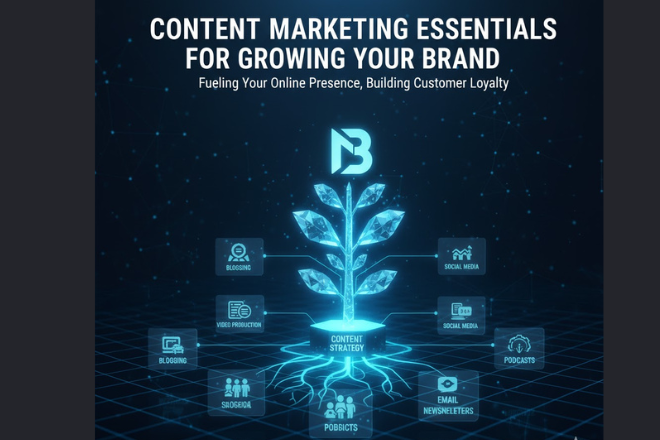
Content Marketing Essentials: Your 2026 Guide to Growing Your Brand
"Content marketing." It's a term thrown around so often it can feel meaningless. Is it just blogging? Is it the same as social media? How is it different from "digital marketing" overall? If you're feeling confused and just want to know what *actually* works for growing your brand online in 2026, you're in the right place. Let's cut through the noise.
What IS Content Marketing in Digital Marketing? (It's the Fuel)
Think of digital marketing as the entire vehicle—your overall online strategy including SEO, paid ads, email, social media, etc. Content marketing isn't the whole vehicle; it's the high-quality fuel that makes it run effectively.
What is content marketing in digital marketing? It's the strategic practice of creating and distributing valuable, relevant, and consistent content (like blog posts, videos, guides, podcasts) to attract and retain a clearly defined audience — and, ultimately, to drive profitable customer action. It's about providing value *first* to build trust and authority.
Why Content Marketing is Important: The 4 Core Benefits for Your Brand
Understanding why content marketing is important is key. It's not just about filling up your website; it delivers tangible business results:
- Builds Unshakeable Trust (E-E-A-T): This is paramount. Great content allows you to *demonstrate* your Experience, Expertise, Authoritativeness, and Trustworthiness (E-E-A-T). You're not just claiming to be an expert; you're proving it with helpful, accurate information. Google rewards this trust with higher rankings.
- Powers Your SEO Efforts: Every valuable piece of content is another opportunity for Google to index your site and rank you for relevant keywords. Without content, your SEO strategy has no substance. It's the bedrock of discoverability.
- Generates Qualified Leads: Offering valuable content (like an ebook, webinar, or checklist) in exchange for contact information is a proven lead generation tactic. Content attracts people who are genuinely interested in your expertise.
- Creates Long-Term Assets: A paid ad campaign stops delivering the moment you stop paying. A high-quality blog post or video, however, can attract organic traffic, build authority, and generate leads for months or even years, offering incredible long-term ROI.
The 4 Essential Types of Content Marketing (with Examples)
While there are many formats, focusing on these 4 types of content marketing provides a solid foundation:
- Blogging / Written Content (Your Digital Hub): This is often the core of your strategy. Long-form articles, how-to guides, case studies, and industry insights establish expertise and target specific keywords. Content marketing example: A detailed guide on "How to Choose the Right WordPress SEO Freelancer." Need help creating rank-worthy posts? Check out our Content & On-Page SEO Services.
- Video Marketing (The Engagement Powerhouse): From short-form videos (TikTok, Instagram Reels, YouTube Shorts) for grabbing attention and building awareness, to longer-form videos (YouTube tutorials, webinars) for in-depth explanations and building authority. Content marketing example: A short video explaining the basics of E-E-A-T.
- Email Marketing (The Relationship Nurturer): Newsletters, automated welcome sequences, targeted campaigns based on user behavior. Email allows you to directly communicate with your audience, build loyalty, and promote your other content. Content marketing example: A weekly newsletter sharing SEO tips and linking back to your latest blog posts.
- Social Media Marketing (The Distribution Network): This is where you promote the content you've created elsewhere (blogs, videos) and engage directly with your audience. It's less about *creating* long-form content here and more about *sharing* it and starting conversations. Content marketing example: Sharing key takeaways from a blog post as an Instagram carousel.
Content Marketing vs. Digital Marketing vs. Social Media Marketing: Clearing the Confusion
Let's simplify the relationship:
- Digital Marketing: The overarching strategy encompassing *all* online marketing efforts (SEO, PPC, email, social media, content marketing, etc.).
- Content Marketing: A *specific strategy* focused on creating valuable assets (blogs, videos, etc.) to attract and engage an audience. It fuels many other digital marketing activities.
- Social Media Marketing: A *channel* or set of channels used for distributing content, engaging with the community, and running paid social ads. Good social media marketing relies heavily on having good content to share.
So, content marketing vs digital marketing isn't an either/or; content marketing is a vital *component* of a comprehensive digital marketing strategy.
Essentials of a Winning Content Marketing Strategy for 2026
Building an effective content marketing strategy doesn't have to be complicated. Focus on these essentials:
- Know Your Audience Deeply: Don't guess. Use keyword research tools, analyze competitor content (like with BuzzSumo or Semrush), and look at your own analytics (Google Analytics, Search Console) to understand what questions your audience has and what problems they need solved.
- Make Your Website the Hub: Social media platforms change algorithms constantly. Your website is the only online asset you fully control. Use other channels (social, email) to drive traffic *back* to your high-quality content on your site. Ensure your website foundation is solid with strong technical SEO.
- Prioritize Quality & Consistency: One deeply researched, genuinely helpful article demonstrating E-E-A-T is far more valuable than ten thin, AI-generated posts. Aim for consistency you can maintain, whether it's one post a week or one a month.
- Measure What Matters: Track key metrics in Google Analytics 4 (GA4) and Google Search Console. Focus on organic traffic growth, engagement rates, lead generation, and ultimately, how content contributes to your business goals.
- Don't Just Create, Distribute: Publishing isn't the final step. Actively promote your content via email, social media, and potentially outreach to relevant communities or publications.
Content Isn't Just King, It's the Kingdom
In 2026, content marketing isn't just *part* of your digital strategy; it's the heart that pumps life into every other channel. It’s how you build trust, demonstrate authority, attract your ideal customers, and achieve sustainable growth online. Focusing on these content marketing essentials for growing your brand is non-negotiable.
Need help defining your strategy or identifying content opportunities? A WordPress SEO Audit can provide a clear roadmap.
Frequently Asked Questions About Content Marketing
What's the difference between content marketing and digital marketing?
Digital marketing is the broad term for all online marketing efforts (SEO, ads, social, email, etc.). Content marketing is a specific strategy *within* digital marketing focused on creating valuable content (blogs, videos, etc.) to attract, engage, and retain an audience, which supports overall digital marketing goals.
What are the 4 main types of content marketing?
The four essential types are: 1. Blogging/Written Content (articles, guides), 2. Video Marketing (short-form and long-form), 3. Email Marketing (newsletters, sequences), and 4. Social Media Marketing (promoting content and engaging community). These form a strong foundation for most businesses.
Why is content marketing important for a small business?
Content marketing is crucial for small businesses because it's a cost-effective way to build trust, generate leads, improve SEO rankings, and compete with larger companies. By providing valuable information, small businesses can establish themselves as experts and attract customers organically without massive ad budgets.
Can I just use social media instead of content marketing?
While social media is important, it works best when supported by strong content marketing. Social media is primarily a distribution and engagement channel. Without valuable content (like blog posts or videos) to share and discuss, your social media efforts will lack substance and authority. Relying solely on social media also means building your brand on platforms you don't control.